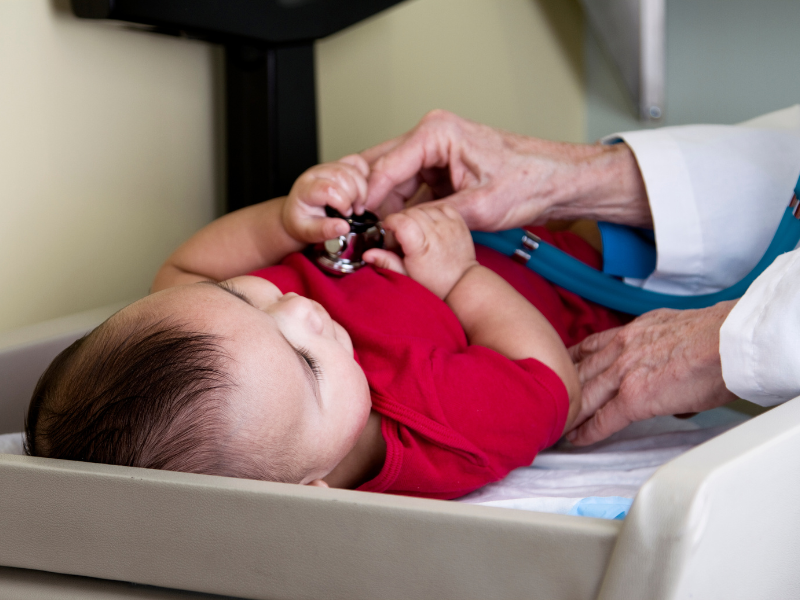
When your child is sick, it is important to know who to turn to for help, examination, and treatment—and also how to assess the urgency of the situation.
In cases where your infant is experiencing a life-threatening condition, you must call EMERGENCY SERVICES at 112 or 194. Communication will be easier if you speak English or another major language, or if someone who speaks Croatian or English can call on your behalf.
At the healthcare facility the ambulance takes you to, your child will be examined by the on-call paediatrician.
If you are staying in a reception centre, contact the on-duty medical team for assistance. They will assess the situation, help the child, or organize further care.
Examination by your chosen paediatrician
When your infant is sick and needs to see a paediatrician, you don’t need to make an appointment in advance, but by calling ahead and scheduling a same-day appointment, you can avoid long waits and crowded waiting rooms. It helps if you are prepared to provide the following information:
- your child’s general condition
- the symptoms of the illness
- how long the symptoms have been present
Based on this information, a healthcare professional will assess how urgent the examination is and guide you on how to care for your child until the visit. After examining your child, the paediatrician will instruct you on further care, prescribe medication or other treatments if necessary, and arrange a follow-up appointment.
If needed, the paediatrician may refer your child to a specialist (e.g. allergist, gastroenterologist, surgeon) and will issue a referral form. With this form, you can ask the paediatrician to schedule the specialist appointment through the digital system, or you can make the appointment yourself by email or phone.
Children typically wait slightly less time for specialist appointments than adults, but if the case is not urgent, a wait of several months is common. Specialist visits can also be arranged privately, but in that case, you will need to pay for the service.
If necessary, the paediatrician may also refer your child for hospital treatment.
In urgent cases or when your paediatrician is not available, you can go directly to the emergency department of the relevant hospital, where your child will receive the necessary medical care.
Since paediatricians also care for healthy children, it is important to respect your scheduled appointment time and not come during hours reserved for healthy-child visits.
If your child develops a rash along with other symptoms, do not enter the general waiting area with other sick children. Instead, inform the nurse about the rash. You will be placed in an isolation room, as rashes are often a sign of infectious childhood illnesses, and this helps prevent the spread of disease to other patients.




 0
0


 English


